
Case Review: What Andrew Hill’s Move From Coca-Cola to Grab Means for EDM Trigger Logic in Southeast Asia
By Felix Rodriguez, EDM strategy desk at APACEdmGrowth
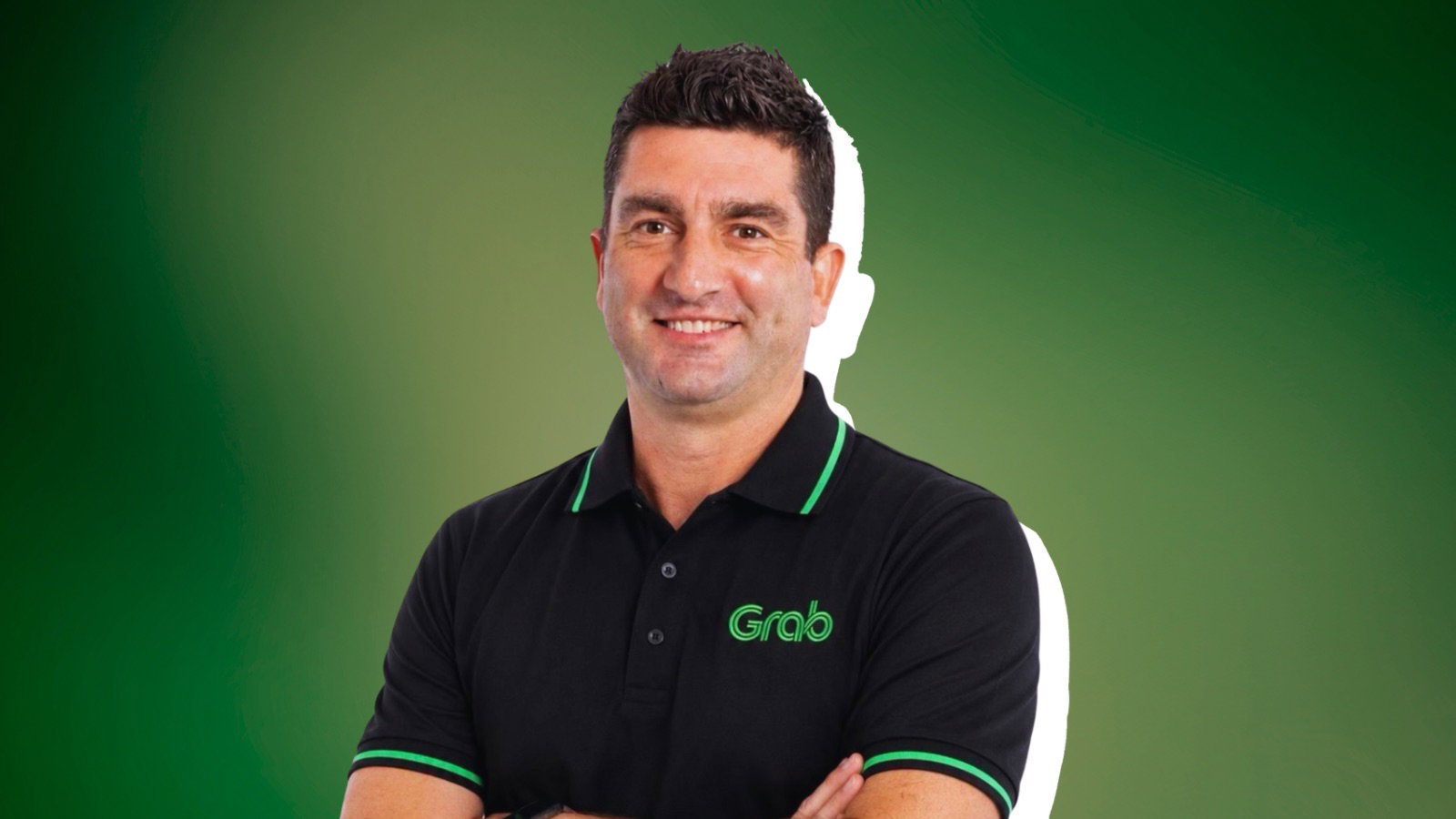
Trigger timing, not creative, is what kills lifecycle email in this region. Picture the standard miss: a bundle offer goes out to a brand’s entire Southeast Asia file, while closed-loop commerce data shows the same basket converting 48 hours earlier in Jakarta. Measured against that failure, Grab appointing Andrew Hill — a Coca-Cola veteran — as head of regional strategic accounts for F&B and FMCG looks less like a hiring note than like a change in who controls shopper-data budgets.
What was announced, and why should an email desk care?
Conclusion first: the appointment changes nothing inside your ESP console. It changes who decides how shopper data gets packaged, priced and sold to brands in the region.
Grab named Andrew Hill, a former Coca-Cola senior director, as head of regional strategic accounts for F&B and FMCG. The move followed his departure from the beverage giant, and Hill announced it in a LinkedIn post, saying he wanted to work alongside leaders in retail media, unlock the potential of shopper data and build partnership ecosystems. In the new role he will lead strategic partnerships across Southeast Asia and work with some of the region’s biggest brands to help them realise greater value through the Grab ecosystem.
Talking exclusively to MARKETING-INTERACTIVE, Hill framed the switch as an execution job rather than a title change: “Having worked on the brand side, I’ve seen the opportunity firsthand. Now, being part of the Grab ecosystem, I’m excited to help turn that opportunity into reality across Southeast Asia,” he said.
“I want us to bring strategy and execution together, solve real business challenges and build innovative partnerships that deliver meaningful value for our clients, our partners, shoppers and Grab,” he added. In lifecycle language, that is a demand to make campaign promises and fulfilment reality agree with each other. His reason for crossing over was blunt: “The chance to come across the fence, work with a team and partners I know and help shape what comes next was incredibly compelling,” he said.
Why the timeline matters more than the job title
Read Hill’s record as a sequence of data problems, not a sequence of promotions. At Coca-Cola he was head of O2O strategic partnerships for ASEAN and the South Pacific from May 2022 to August 2023, then digital acceleration strategy and enablement senior director from August 2023. He has highlighted his role in building the company’s partnership with Grab, including the Coke & Go initiative, along with digital acceleration in New Zealand and AI enablement across ASEAN and the South Pacific. Before that he was director of sales for APAC at eCommerce intelligence firm Edge by Ascential, and he held earlier roles at Octopus Group and Woolworths Group, based in Australia.
The public record fills in the sequencing the announcement leaves out. Grab and Coca-Cola announced a regional partnership spanning six markets — Singapore, Indonesia, Malaysia, Thailand, the Philippines and Vietnam — on 18 August 2022, built on putting distributors’ and retailers’ storefronts onto GrabFood and GrabMart (Grab press room). That lands inside the O2O window described above. In December 2024 the two companies described an expanded partnership aimed at hybrid shoppers, with the Foodmarks campaign rolling out across several Southeast Asian cities (TechNode Global). Grab’s second-quarter 2025 accounts then reported advertising revenue up 45% year on year to an annualised run-rate of $236 million, with quarterly active advertisers on the self-serve platform up 31% to 220,000 and average spend up 42%.
The reusable lesson for EDM planners: the person who once had to justify data access from the brand side now sells it from the platform side. Expect pitches to move from reach to closed-loop relevance, and expect that data to arrive with conditions attached.
How should shopper data change your segmentation logic?
Segmentation on shopper data is mostly subtraction. The win is not discovering a new audience; it is not mailing people whose context has already changed. Three axes are enough to start, and what follows is our analysis rather than any published platform method.
- Behavioural state: last category purchased, delivery cadence, and whether the basket converted at full price or on promotion.
- Availability state: stock, outlet coverage and the fulfilment promise in the recipient’s own city. An offer that cannot be honoured is a complaint generator.
- Permission state: consent basis, channel preference and retention limit in each market. Southeast Asia is not one rulebook.
That third axis is what turns a data partnership into a legal review. Shopper and retail-media signals usually sit on the platform; moving them into a brand-owned email flow is a purpose and disclosure question, not a spreadsheet join. Indonesia’s Personal Data Protection Law (Law No. 27 of 2022) sets comprehensive obligations around consent, while Singapore’s PDPA governs the collection, use and disclosure of personal data in commercial communications. Confirm the lawful basis with counsel before a single field leaves the platform.
What does the automation flow look like once the signal arrives?
For an F&B or FMCG account in the region, this is the branch logic we would wire before touching the send calendar.
| Signal | Where it comes from | Send / hold rule | Failure to test first |
|---|---|---|---|
| Category purchase in the last 7 days | Order feed or closed-loop retail-media report | Suppress that category from the promo blast; queue a replenishment preview at day 12–21 | Feed stops updating, so a stale offer ships |
| Stockout or delisting in the recipient’s city | Inventory and location API | Swap the product slot and keep the send; hold only if no substitute exists | No hold branch, so the email promises what cannot be delivered |
| First order in a new market | Onboarding event | Start the welcome flow and exclude the contact from acquisition discounts | Welcome and acquisition overlap, leaking discount |
| Cadence drop over two cycles | Behavioural timer | Trigger a win-back built on proof of relevance, not a deeper price cut | Any touch resets the timer, so nobody ever enters win-back |
| Asset or licence expiry | Creative metadata | Auto-drop the content block before the licence lapses | Manual clean-up, so an expired asset keeps sending |
Before scaling any branch, ask the vendor or the platform team for reproducible failure disclosures: what the flow does when the feed is empty, when a city’s price file is stale, and when a support ticket is already open on that account.
Which mistakes do APAC teams make first?
- Treating this as personnel news. The headline is interesting; the procurement consequence is that shopper-data line items increasingly sit inside commercial teams, not media agencies.
- Using data only to target, never to suppress. If your segmentation only adds recipients, you are still batch-and-blast with extra steps.
- Assuming a cross-platform join is a technical task. It is a consent question first and an identity graph question second.
- Switching KPIs mid-flight. Retail media reports on closed-loop sales; email dashboards still argue about opens. Pick one denominator per programme.
- Rewriting the calendar before rewiring the triggers. A new content plan on top of broken triggers just schedules more irrelevant sends.
What results can you actually expect?
The directional evidence is not controversial. Klaviyo’s retention guidance reports segmented sends producing roughly twice the open rate and three times the revenue per recipient versus batch-and-blast. On the supply side, Grab reported advertising revenue growing 45% year on year in the second quarter of 2025, and a GrabAds and Kantar study projects Southeast Asia retail-media network ad spend reaching US$4.7 billion by 2030, a 73% rise over seven years.
Read together, they point at the same operational truth: shoppers are not allergic to brand email, they are allergic to email that has nothing to do with them. Behaviour-triggered sends can outperform a calendar blast several times over, while calendar-only sends quietly train the file to ignore you.
FAQ: what growth leads ask about this move
Does the appointment change our email roadmap?
Not in structure. Expect changes in what is available for purchase — richer shopper signals bundled into strategic-account packages — and in who owns the budget conversation. Plan your data requirements now so you are not accepting whatever schema ships next quarter.
Can we drop platform purchase data straight into our ESP?
Assume not without review. The lawful basis, the disclosure made at collection and the retention window all have to survive a per-market check before those fields drive automated email.
Segmentation or automation — which comes first?
Segment definition, then the trigger, then creative. Teams that invert the order end up personalising subject lines for an audience that should not have received the send at all.
Which KPI proves the change worked?
Start with suppression accuracy: complaint rate, unsubscribe rate and delivery failures on triggered flows versus a held-out control. Revenue per recipient is the lagging confirmation, not the first signal.
Action list: trigger conditions to wire this quarter
If you do only one thing, make it subtraction: use the list below as the occasion to rebalance promo blasts against lifecycle flows rather than to write another calendar.
- Purchase in category X within 7 days → suppress category X from blast, open replenishment branch.
- Stock unavailable in recipient city → swap SKU slot; never send an unhonourable offer.
- Open ticket or delivery delay on record → hold promotional sends, route to service ops.
- First order in a new market → welcome flow on, acquisition discount off.
- Two cadence cycles missed → relevance-led win-back, not a deeper discount.
- Consent or licence flag stale by more than 30 days → pause the branch and re-verify.
Sources referenced
- Grab press room, Coca-Cola and Grab regional partnership announcement, 18 August 2022: https://www.grab.com/sg/press/others/coca-cola-and-grab-join-hands-to-drive-growth-and-digitalisation-in-southeast-asia/
- Grab Reports Second Quarter 2025 Results: https://www.grab.com/sg/press/others/grab-reports-second-quarter-2025-results/
- GrabAds and Kantar retail-media study: https://www.grab.com/sg/inside-grab/stories/retail-media-networks-grabads-kantar-advertising/
- TechNode Global on the expanded Coca-Cola and Grab partnership, 4 December 2024: https://technode.global/2024-12-04/coca-cola-grab-expand-partnership-to-deliver-innovative-consumer-experiences-in-southeast-asia/
- DLA Piper Data Protection Laws of the World, Indonesia: https://www.dlapiperdataprotection.com/index.html?t=law&c=ID
- Klaviyo guidance on unsubscribe reduction and segmentation: https://www.klaviyo.com/uk/blog/reduce-email-unsubscribes
- MARKETING-INTERACTIVE interview with Hill on the Grab appointment: https://www.marketing-interactive.com/grab-taps-former-coca-cola-senior-director-to-lead-regional-f-b-and-fmcg-accounts