
Buyer-Controlled AI Agents Are Rewiring the Journey: What Martech for 2026 Means for APAC Email and CRM Teams
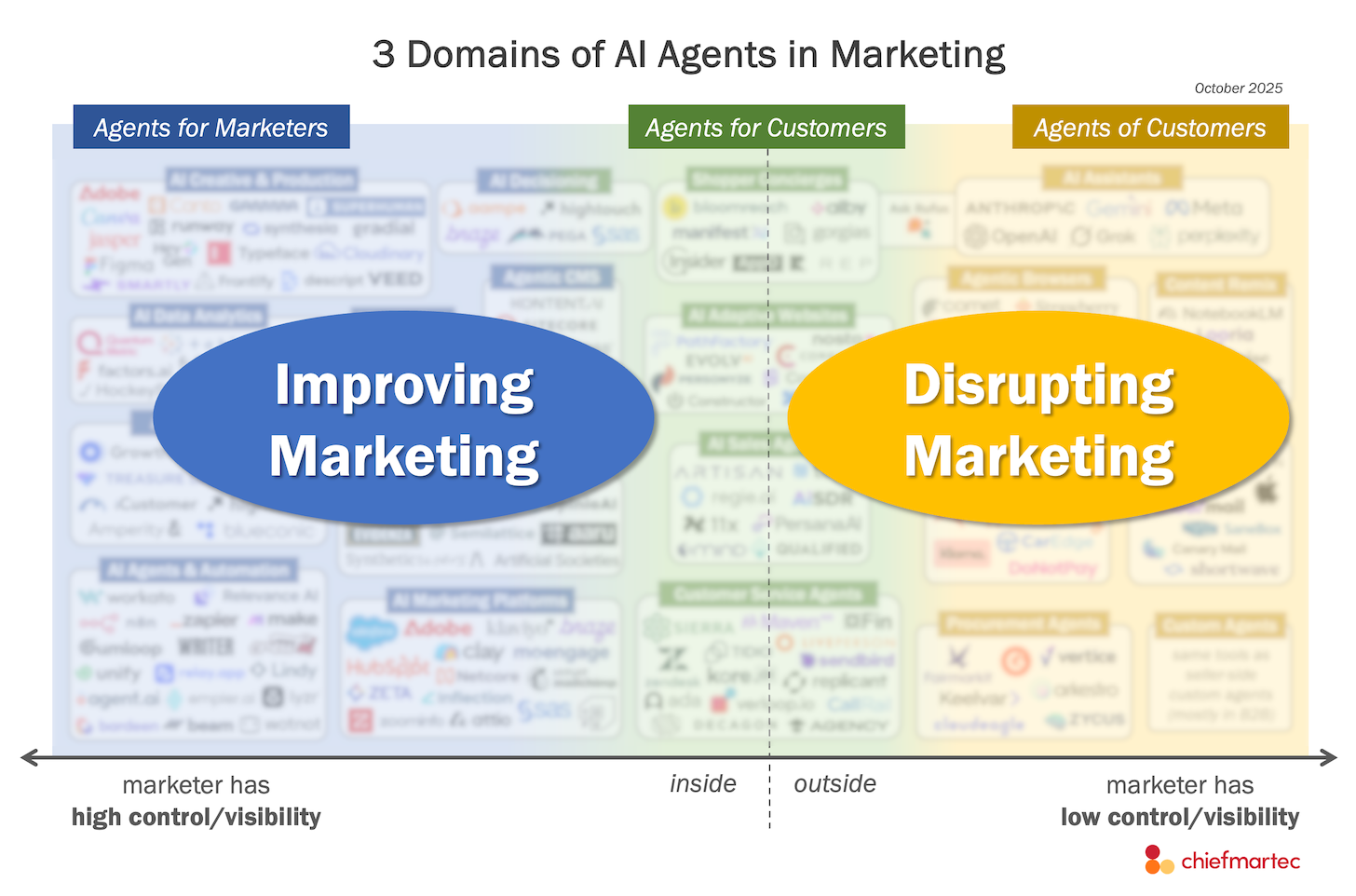
Buyer-controlled AI agents, not the copilots living inside marketing stacks, are the disruption the Martech for 2026 research puts at the centre of its argument. Released December 2, the report concludes that assistants now intercept discovery, comparison and even payment — so email and CRM teams risk losing both the clickstream and every metric built on it.
The backdrop matters for APAC practitioners. The AI & Data in Marketing study underpinning the report found 90.3% of participating teams already using AI agents somewhere in their martech stack, including limited production or trial use. These respondents run marketing operations at large B2C and B2B brands, so their adoption signals are operational rather than speculative.
What counts as a marketing AI agent — and why the definition decides the risk
The report classifies agents by whom they serve rather than by model size or feature count. Three groups emerge: agents working for marketers (briefing, production, distribution, analysis), agents a brand places in front of customers (service bots, guided shopping), and agents owned by the buyer. Only the third sits beyond your control, and only the third changes market structure.
Everything in the first two categories optimises the machine you already own. It lowers cost — the phrasing executives default to is do more with less — and sometimes lifts effectiveness. Both outcomes are genuine; both remain incremental, because the funnel, the offer and the measurement framework survive intact.
Why the disruption lands on the buyer's side of the transaction
Start with the conclusion: a shopper's or procurement lead's agent alters the architecture of the journey, not merely its velocity. The sharpest illustration is the displacement of classic Google search — the channel SEO teams have refined for the past 25 years — as questions migrate into ChatGPT, Claude, Perplexity and Google's own Gemini platform.
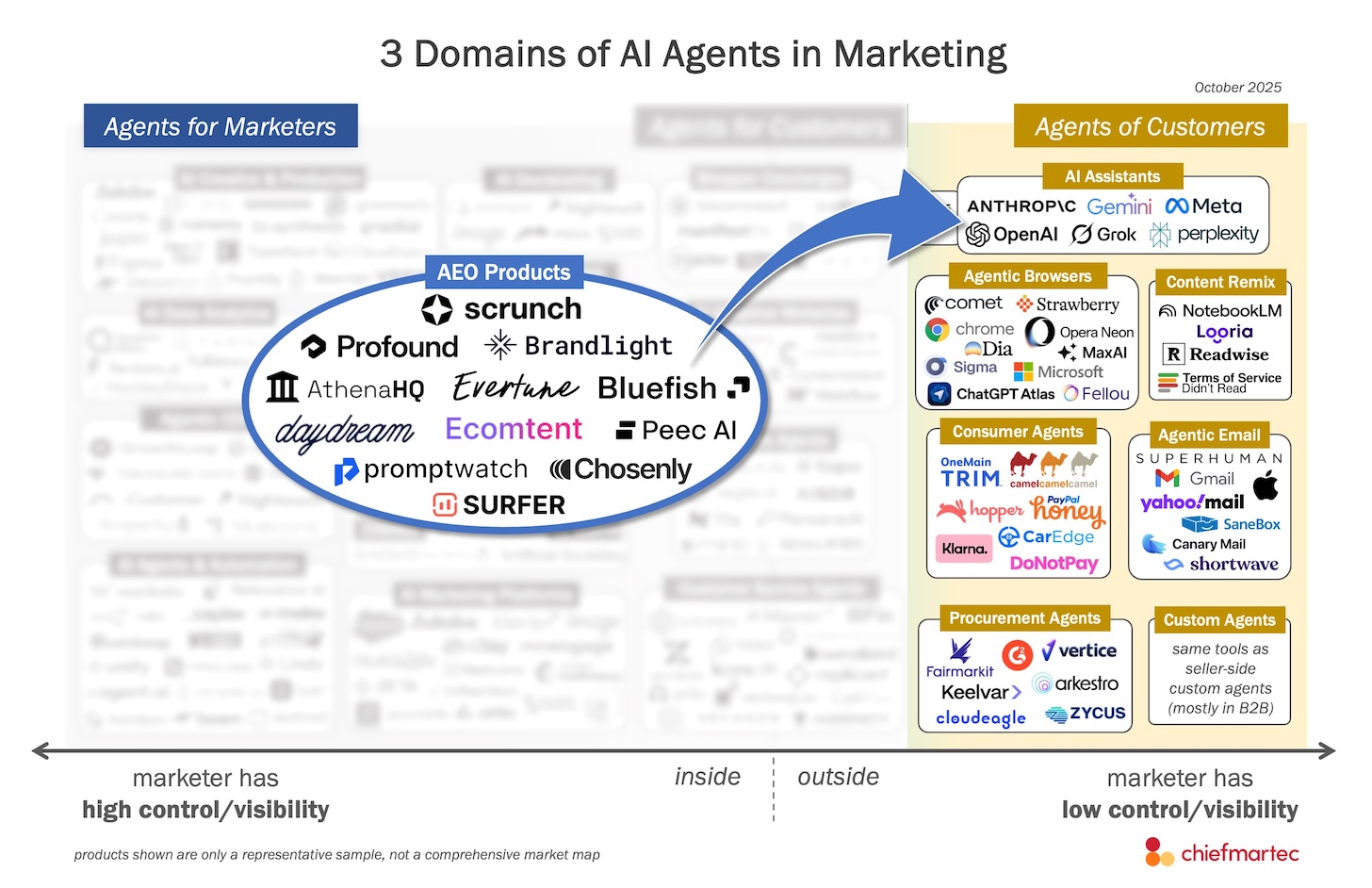
Once a model composes the answer, a brand is quoted, summarised or omitted, and the impression, click and session that dashboards depend on never occur. An AEO product category has formed to respond and is expanding fast, yet it remains early-generation while the agent environment outruns it — the report likens the gap to chasing a bullet train on a bicycle.
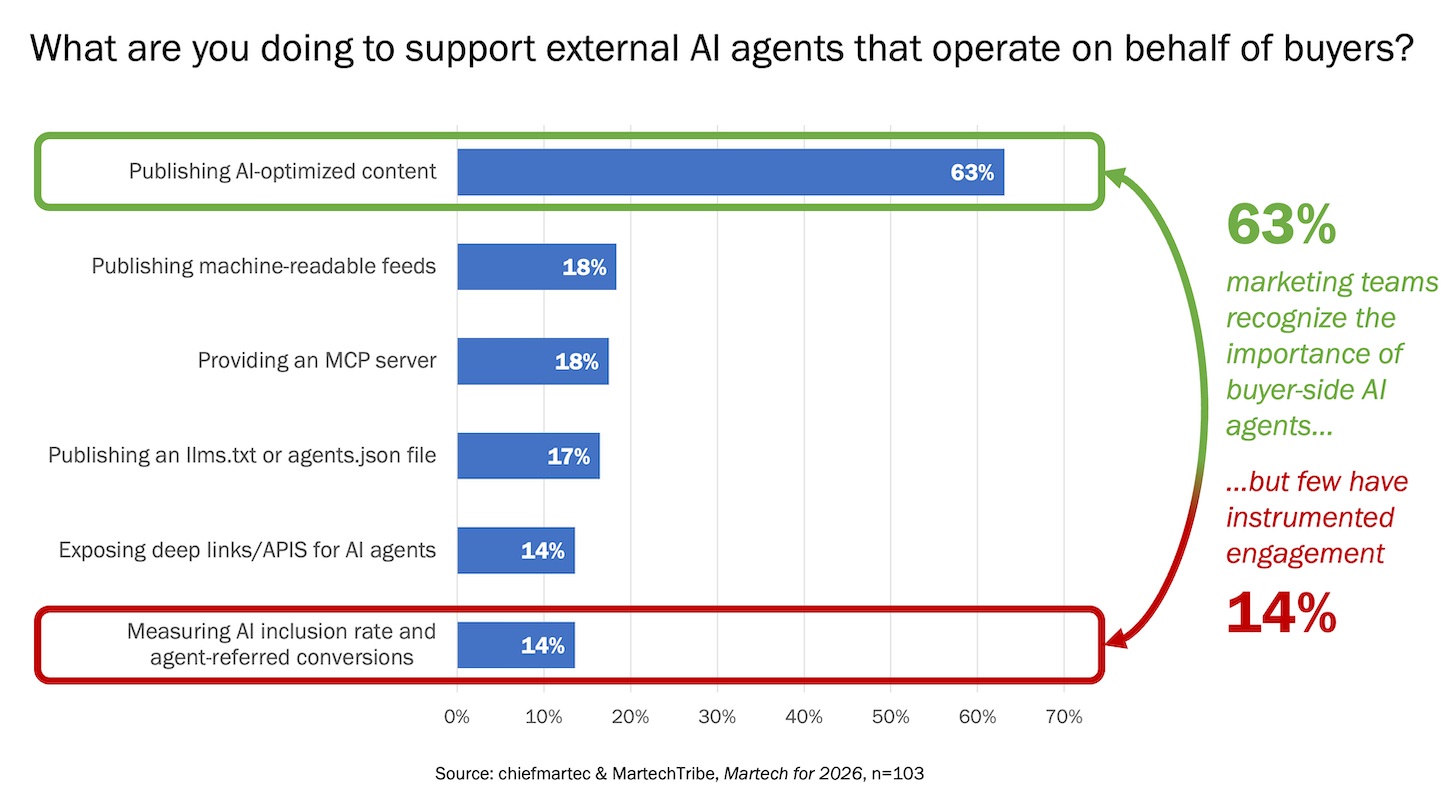
Readiness is uneven. 63% of surveyed marketing teams accept that search channels and buyer behaviour have shifted and are adjusting content strategy deliberately; only 14% have instrumented the shift. Changing behaviour without measuring it is exactly the pattern that leaks budget during 2026.
The B2B trajectory reinforces the point. Gartner's November 2025 strategic prediction expects 90% of B2B buying to be AI-agent intermediated by 2028, pushing more than $15 trillion of spend through agent exchanges, as reported by Digital Commerce 360 on 28 November 2025. For APAC teams selling into enterprise accounts, that implies a nurture email is frequently parsed by software before any human opens it.
How quickly this becomes a channel problem: from answering to acting
The report expects acceleration across the next 6-12 months, as assistants move from informational answer engines to agentic action engines that transact on a customer's instruction.
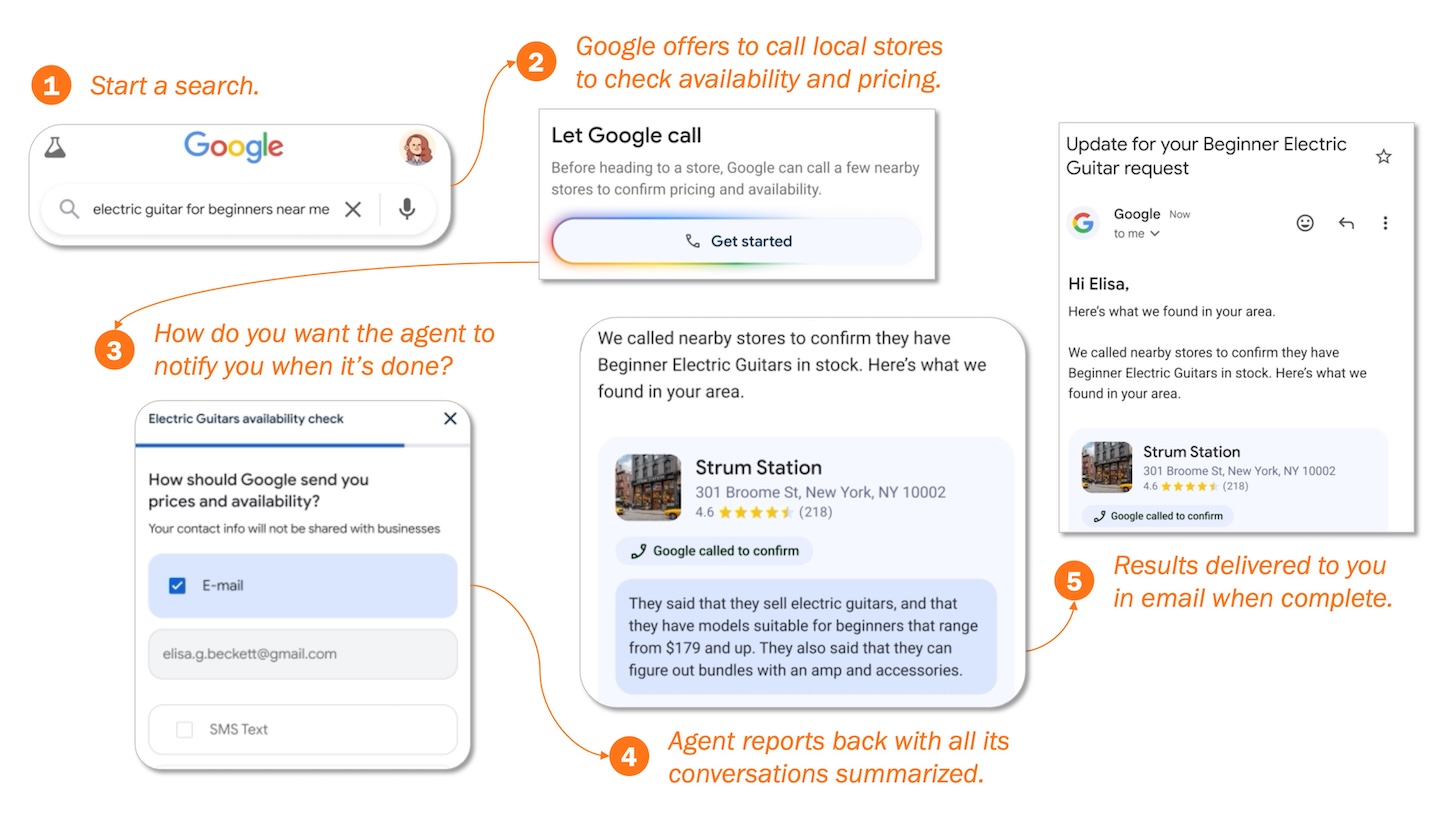
OpenAI shipped Instant Checkout a couple of months ago, allowing purchases from Etsy and Shopify stores inside ChatGPT, with a Walmart arrangement announced weeks later. Alongside it, ChatGPT Apps embed 3rd-party services in the conversation, with a launch roster covering Booking.com, Canva, Coursera, Figma, Spotify and Zillow. Google is playing the same hand: agentic checkout that tracks a target price until it fits a stated budget and then completes payment through Google Pay, plus a Gemini AI agent that telephones local stores to check price and stock and reports the offers back by email.
Fast Company's April 2026 analysis frames the risk precisely: the change is not that machines think for customers but that they increasingly shop for them. Any purchase that completes inside an assistant is a purchase your landing page never witnesses — and your last-click attribution never records.
Why outbound email and calling rebound against sellers
The irony is structural. B2B sellers spent a year deploying outbound AI SDRs, accepting a heavier inbox of personalized yet impersonal touchpoints as the price of rep efficiency rather than customer value. Now the customer delegates: an agent places the calls and works the replies while the human stays out of it, and salespeople absorb rising machine-originated volume. Hanging up is tempting, but it concedes the deal to a competitor who answers.
Gartner's own forecast suggests the arms race does not pay automatically: by 2028 it expects AI agents to outnumber human sellers tenfold, with fewer than 40% of sellers reporting productivity gains from them. Agent-to-agent exchange is the likely equilibrium; the current human-to-machine middle is a brief, inefficient phase. The marketing question becomes how to address, and serve, agents acting on behalf of your target audience.
What this means for email and CRM programmes in Asia-Pacific
Regionally, the channel is not contracting. Dotdigital's 2026 APAC benchmark set shows email sends among its regional customers up 44.1% year on year, an average open rate of 47.6% (up 11.8%) and a unique open rate of 34.5% (up 12.9%). Litmus, surveying close to 500 marketers, found 70% expecting up to half of their email operations to be AI-driven in 2026.
Those figures deserve scrutiny rather than celebration. Mailbox providers increasingly pre-fetch and summarise messages, and some platforms log those automated reads as human opens, inflating engagement; Validity's May 2026 review notes the evidence remains contradictory. The defensible reading is that measurement reliability is falling while send volume climbs — a dangerous combination for teams defending channel budget.
Strategically, two gates now decide whether a message reaches a decision-maker: sender reputation and the model's willingness to cite you. For anyone delivering more than 5,000 messages a day to Gmail, Google's sender guidelines require SPF and DKIM, DMARC alignment and a one-click unsubscribe mechanism. Hygiene that used to be a deliverability chore is now entry to agent-mediated commerce, because a spam-foldered or complained-away send never reaches the assistant that summarises your campaign.
Restating the dashboard makes the shift concrete:
| Legacy signal | What buyer-side agents break | What to track instead |
|---|---|---|
| Open rate | Pre-fetches and AI summaries are logged as reads | Authenticated inbox placement, click-to-open on de-duplicated opens, replies |
| Site sessions from search | Answers are composed without a click-out | Citation share inside AI answers, brand-search volume, agent traffic logs |
| Landing-page conversion | Checkout completes inside the assistant | Incrementality tests, assisted revenue, geo-holdout lift |
| List growth | Consent is routed through a machine flow | Verified opt-in records, preference-centre depth, complaint rate under 0.3% |
| Segment reach | Summary layers truncate your copy | First-sentence test of what a model renders for each send |
Five misconceptions to drop before budget planning
- "An AEO tool restores lost visibility." These products are early-generation; the environment moves faster than the instrumentation, and 14% adoption of measurement confirms the immaturity.
- "Rising opens prove the channel is healthy." Automated reads and summary pre-fetches can lift opens while clicks and revenue fall.
- "Agent-mediated buying is a consumer-only story." Gartner's 2028 projection places the largest share of agent-intermediated spend in B2B procurement, where email is the default workflow.
- "Human-written copy is safe from machine editing." AI inbox summarisation rewrites what the recipient actually sees, compressing offers and stripping links.
- "Deliverability is an IT task." With agents gating visibility, authentication and complaint control have become top-of-funnel strategy.
A 90-day action list for growth and CRM teams
- Audit the inbox first. Confirm SPF, DKIM and DMARC alignment, one-click unsubscribe headers and complaint rates, then split reporting by mailbox provider to isolate inflated engagement.
- Instrument agent traffic. Log assistant and crawler user-agents at server level, tag "answered by AI" brand searches, and set a monthly citation-share check across ChatGPT, Perplexity and Google's assistant surfaces.
- Publish machine-readable answers. Structured product data, explicit pricing, comparison tables and short FAQ blocks in email preheaders and landing copy — content a model can quote verbatim.
- Redesign one lifecycle flow for action. Replenishment, order status and renewal are the journeys an agent can execute on a customer's behalf; make them instruction-friendly rather than banner-led.
- Replace the KPI ladder. Move primary reporting from opens to replies, click-to-open, authenticated inbox placement and revenue per send; keep incrementality as the tie-breaker.
- Harden consent. Verified opt-in with timestamped records, a real preference centre, and suppression of low-engagement segments that damage reputation with both filters and models.
- Run a quarterly visibility stress test. Ask ten purchase-intent questions in three assistants, record where your brand appears, and convert the gaps into content briefs.
FAQ: buyer-side agents and the email channel
Does email lose relevance when buyers use AI agents?
Not as a delivery layer, but as an attention layer. Email remains the notification and identity rail that agents traverse — which is why deliverability, consent depth and machine-readable content now determine whether your message is surfaced, summarised or skipped.
How is AEO different from SEO for a CRM team?
SEO optimises a page for a ranked list a human clicks. AEO optimises statements a model can extract and repeat. For lifecycle teams, the practical output is not more blog posts but explicit offers, prices and policies that survive compression into a two-line answer.
Why do open rates improve while revenue stays flat?
Because reads are no longer exclusively human. Pre-fetching for summaries and image proxying can register as opens, while the delivered experience reaches fewer inboxes or is consumed as a machine-written digest. Treat open-rate growth after mid-2025 as unverified until you can separate provider-side automation from human engagement.
What should a small APAC brand do first?
Authentication and unsubscribe compliance, then one high-value flow rebuilt for action. Regional benchmarks show send volume up 44.1% year on year in APAC, so competition for inbox placement is intensifying faster than list quality is improving.
What is behind the Martech for 2026 report?
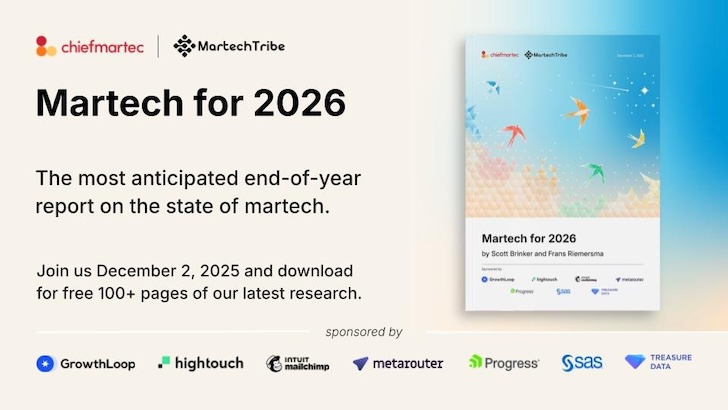
The 100+ page study, supported by GrowthLoop, Hightouch, Intuit Mailchimp, MetaRouter, Progress, SAS and Treasure Data, maps the first pragmatic steps of marketing to agents — including how to instrument a buyer journey you can no longer see.
Sources
- Martech for 2026 report summary and AI & Data in Marketing survey findings, released December 2.
- Gartner press release, 18 November 2025, on AI agents outnumbering sellers: https://www.gartner.com/en/newsroom/press-releases/2025-11-18-gartner-predicts-by-2028-ai-agents-will-outnumber-sellers-by-10x-yet-fewer-than-40-percent-of-sellers-will-report-ai-agents-improved-productivity
- Digital Commerce 360 on Gartner's $15 trillion agent-intermediated B2B forecast, 28 November 2025: https://www.digitalcommerce360.com/2025/11/28/gartner-ai-agents-15-trillion-in-b2b-purchases-by-2028/
- Dotdigital, Email and SMS marketing benchmarks 2026: APAC edition: https://dotdigital.com/blog/email-and-sms-marketing-benchmarks-apac-edition/
- Google email sender guidelines: https://support.google.com/mail/answer/81126
- Validity on Gmail open-rate movement and AI summaries, May 2026: https://www.validity.com/blog/whats-really-behind-gmails-open-rate-drop-and-what-to-do-about-it/
- Fast Company on agentic shopping, April 2026: https://www.fastcompany.com/91520135/in-the-age-of-ai-agents-your-customer-may-still-buy-from-you-but-they-may-no-longer-visit-you
Reported by Elena May, APACEdmGrowth EDMNews desk.