
EDMNews Deep Dive: What KFC’s KWENCH Sound Launch Changes for APAC Segmentation and Trigger Design
A launch blast goes to the whole list, the open rate looks fine, and the new SKUs still sell nothing. That is the failure most beverage drops repeat. KFC’s KWENCH debut in Australia answers it structurally: Eleven drinks in four families were positioned as a permanent sub-brand with its own identity, which hands lifecycle teams a category to segment on instead of a banner to rotate.
Special built the campaign, titled It’s All You Can Drink About, from a rebuild of Can’t Get You Out of My Head using sounds recorded from the real beverages. Read as advertising, it is a memorable stunt. Read as CRM input, it is a signal that drinks are being managed as a separate demand object — and that is where APAC email, SMS and app-messaging teams should take notes.
What did KFC actually launch in Australia?
Conclusion first: this is brand architecture, not a limited-time promotion.
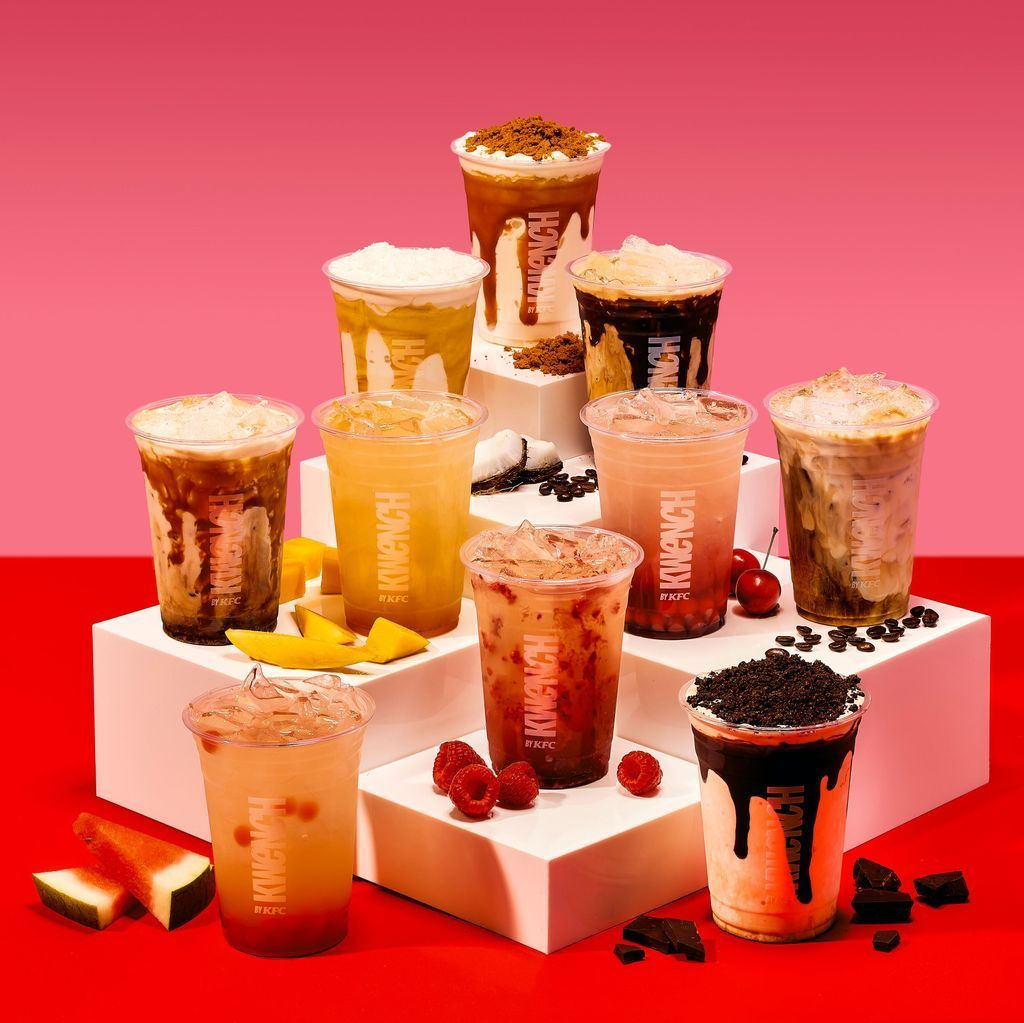
The debut lineup contains 11 flavors, divided into four families. Examples called out at launch include Sparkling Raspberry Lemonade, Watermelon Boba Refresher, Caramel Krunch Shake and Chocolate Krunch Shake. The families are:
- Krunch Shakes — texture-led, dessert-adjacent
- Boba Refreshers — visual, social-native formats
- Sparkling Lemonades — low-commitment entry drinks
- Frozen Spiders — seasonal, heat-driven purchases
Rollout across Australia began on November 3, 2026 through film, cinema, outdoor, social, earned and digital placements, with further activity planned through the Australian summer, according to KFC. Holly McCarthy, marketing director, framed KWENCH as a permanent sub-brand meant to pull in new customers while giving existing fans another reason to visit. That wording matters operationally: “another reason to visit” is a frequency and occasion play, which is exactly what lifecycle channels are supposed to run.
Why does a permanent sub-brand change segmentation logic?
Because a sub-brand creates a new dimension in the customer record, not just a new image in the newsletter.
The creative reinforces that. Leilani Croucher of Revolver directed the launch film, placing the range inside a bright, surreal music-video world, while Rumble Studios recorded and sampled the actual drinks to rebuild the pop hit. Special’s creative leaders, Tom Martin and Jules Schreiber, described the goal as keeping the drinks in the centre of every frame. When the drink — not the chicken — is the hero, the data model should follow: a purchase now carries a category signal that can be scored, routed and measured.
A defensible mapping for QSR and retail QSR-adjacent lists looks like this. It is our analysis, not KFC’s published architecture:
| Behavioural signal | Segment to create | Send logic that follows |
|---|---|---|
| First KWENCH item enters the basket | New drink taster | One follow-up after 24 hours, next-best family, never the same SKU twice |
| Two or more Krunch Shakes in 60 days | Shake regular | Flavour-drop alerts, afternoon window, opt out of sparkling content |
| Only Boba Refreshers or Sparkling Lemonades | Cold and sparkling, no shake | Suppress shake creative to cut noise, not the contact |
| Drinks ordered without a main | Drinks-destination buyer | Separate frequency cap; this is the “new customer” cohort being chased |
| Heat or holiday spikes | Seasonal Frozen Spiders buyer | Weather-gated send with a permanent holdout for measurement |
How should automation flows be rewired around drinks?
Trigger on the behaviour that already happened, not on the media calendar.
Industry aggregation from Emercury reports behaviour-triggered emails delivering roughly 74% higher open rates and 152% better click-through than batch sends — a gap wide enough that a calendar blast announcing a drinks range is the weaker choice by default. The practical rewrite for a launch week: keep one awareness send for the whole base, then move every subsequent message behind category conditions (first drink purchase, family affinity, reorder interval breach, store or app channel). Drinks reorder faster than mains, so the reorder trigger should be calculated from drink-only order spacing rather than inherited from the customer’s overall cadence.
Add two guardrails before scaling. First, suppress the offer, not the person: when stockouts or fulfilment delays hit a family, pause that branch only. Second, price the exception handling into the automation case — a triggered launch flow that generates support replies and rework is not free upside.
Can a sound-led campaign survive inside an email template?
Only if it is rebuilt, not resized.
Most mail clients will not autoplay audio, and heavy media drags render time and inbox placement; Litmus guidance on email file size and load times is blunt about compressing images and limiting animated GIFs. So the campaign’s actual asset — the sound of sipping and slurping — has to be translated into a short loop or a still plus copy that names the sound, while the landing video carries the real hook. The tracking implication is worth stating plainly: open rates are losing meaning as inbox-side filtering and previews change, so clicks, SKU attaches and orders do the reporting.
Rights scope is the second trap. The recreated melody belongs to a catalogue hit written and produced by Cathy Dennis and Rob Davis and released in 2001 (per Wikipedia), and a sync clearance negotiated for film, cinema and outdoor does not automatically extend into owned lifecycle templates and long-running automated flows. Check clearance media before reuse, and where creator or licensed audio is involved, license creator content into email on its own terms rather than assuming the campaign licence covers everything downstream.
What is proven, and what is still missing?
Category intent is documented; campaign effectiveness is not.
The press release cites Dentsu research from October 2026 finding that 70% of consumers say beverage choices reflect their identity or mood, and a 2022 NielsenIQ and CGA report finding that 40% enjoy experimenting with new drinks. These are category insights behind the creative idea, not measured KWENCH outcomes. KFC has not disclosed campaign performance or sales figures, so trial, repeat and basket lift remain unproven. Any APAC team citing this case internally should label it as a creative and architecture precedent, not a conversion benchmark.
Which mistakes should APAC teams avoid copying?
- Treating the launch as one broadcast: the range only earns list value once it exists as a segment dimension.
- Quoting the 70% and 40% figures as if they measured this campaign — they do not.
- Reusing campaign media assets in automated flows without checking owned-channel clearance.
- Shipping the sound-first creative as a heavy file into templates that will not play it.
- Judging the launch on opens during the Australian summer window instead of drink repeat rate at 30 and 60 days.
What does the Canada rollout add to the trend?
It shows this is capital-backed, not opportunistic. A KFC Canada announcement dated July 27, 2026 described Kwench reaching more than 170 locations by summer’s end and expanding to 600 in 2027 on a $30 million investment from KFC Canada and its franchisees (BNN Bloomberg). When a drinks identity carries that kind of rollout commitment, the lifecycle consequence is predictable: high-frequency, low-basket purchases become the cheapest retention lever a QSR database has, and APAC operators running similar categories should expect beverage-led trigger sets to grow faster than menu-led ones.
FAQ: what growth teams ask after this case
Is a sub-brand launch worth a dedicated email flow?
Yes, if the sub-brand has its own SKU taxonomy, its own reorder rhythm and its own margin logic. Otherwise it is one more promotion inside the existing flow.
What metric should lead a beverage launch report?
Drink attach rate on the first order after exposure, then drink-only repeat within 30 and 60 days, measured against a holdout group.
Should the campaign video go into the email?
Rarely as-is. Use a lightweight visual plus a click to hosted video; audio-first creative needs a fallback that still communicates the sensory hook.
Does this prove behavioural triggers beat calendar blasts?
Not on its own. It shows the trigger exists — a category flag inside the order — which the aggregate 74% and 152% gaps suggest is worth automating.
Trigger checklist: wire these before the next drinks launch
- Category-in-basket flag: first purchase of any new sub-brand SKU, delayed 24 hours, deduplicated against live promo sends.
- Family affinity score: orders per family over 60 days, routing each contact into one of four tracks.
- Drink-only reorder breach: median days between drink orders, not overall order cadence.
- Season or weather gate for frozen and sparkling lines, always paired with a holdout.
- Fulfilment gate: pause the branch that cannot be delivered instead of slowing the whole calendar.
- Rights gate: only assets cleared for owned channels enter automated templates.
- Recovery rule: a customer who stops buying drinks exits the drink segment, never the whole programme.
Sources
- KFC Australia and Special press release, November 5, 2026, and Campaign Brief, November 5, 2026.
- BNN Bloomberg, KFC Canada Kwench launch announcement, July 27, 2026: https://www.bnnbloomberg.ca/press-releases/2026/07/27/come-get-it-kfc-canada-launches-new-beverage-brand-to-kwench-nationwide-thirst/
- Emercury, behaviour-based email trigger benchmarks: https://www.emercury.net/blog/email-marketing-tips/behavior-based-email-triggers/
- Litmus, guide to email file size and load times: https://www.litmus.com/blog/guide-to-email-file-size-and-load-times
- Wikipedia, Can’t Get You Out of My Head songwriting and release credits: https://en.wikipedia.org/wiki/Can%27t_Get_You_Out_of_My_Head