
EDMNews Q&A: Should You Scale AI Email Automation? 8 Questions APAC Growth Teams Should Ask First
Short answer: scale an automation only where a reader can still reach a named human, and freeze anything that can send in someone's name without being read first. The most instructive incidents of this cycle did not come from a retail call centre. They came from marketing technology vendors, where the customer journey is the product. Over the past weeks, a veteran martech analyst documented two failures at vendors he dealt with directly — one as a paying subscriber, one as a non-buyer who merely downloaded a report — and both land in the same awkward cell of the efficiency grid.
Rather than retell the anecdote, EDMNews has converted it into a decision sheet: the questions a CRM, lifecycle or growth lead in Asia-Pacific should be able to answer before the next agent is switched on to the full list.
What does "unattended" actually mean in an EDM stack?
It means no human checkpoint, not even the lightest one. The industry shorthand is brutal and memorable: The Wi-Fi’s on, but there’s no Internet. Something is broadcasting; nothing is listening.
Concretely, an agent or rule counts as unattended when it reads an inbound message, writes an outbound one, or moves a contact between workflows without anyone seeing the result — including a post-hoc skim of what was actually sent. The chiefmartec write-up calls the resulting posture annoyingly efficient: cheap per send for the sender, irritating per send for the receiver.
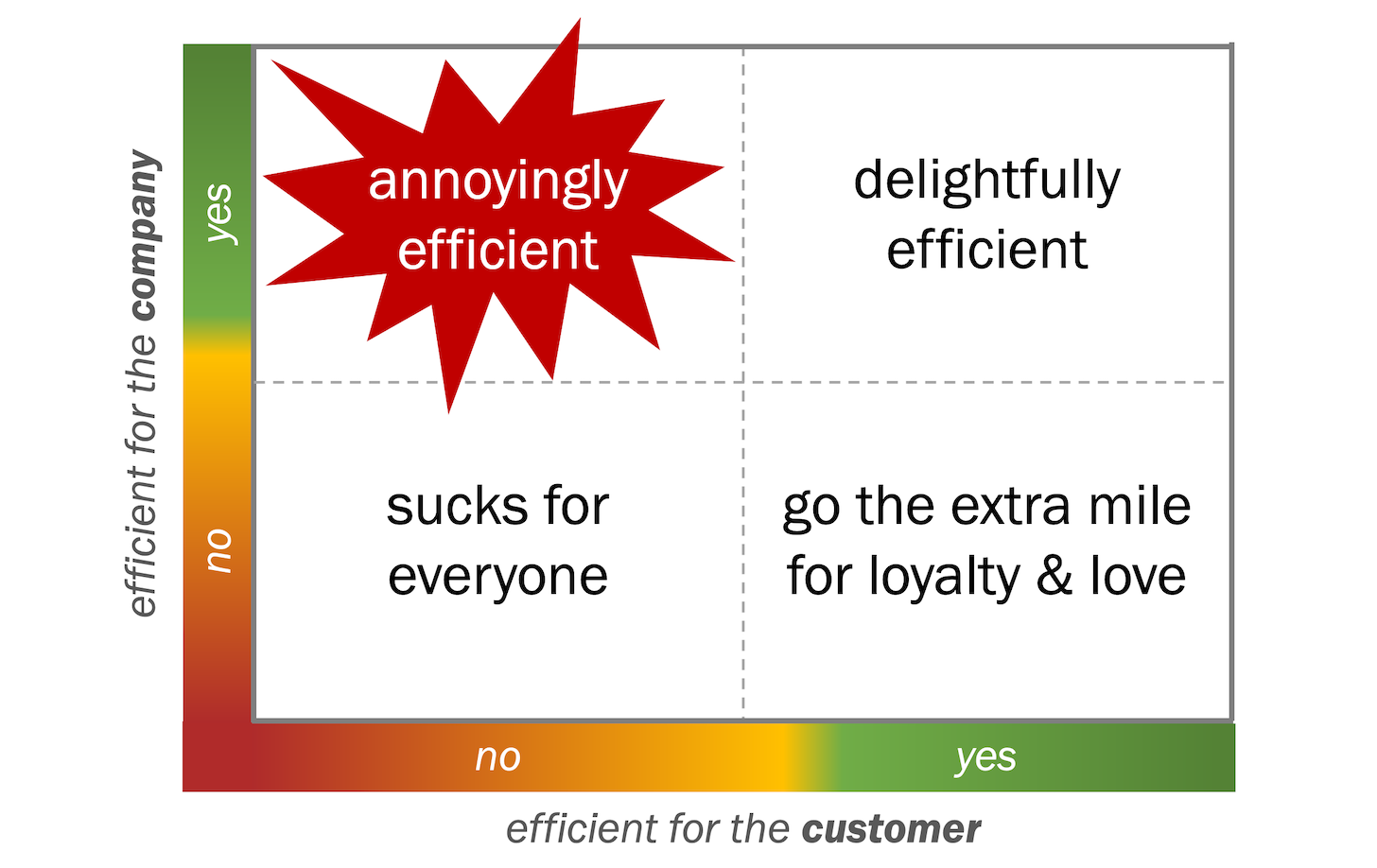
The 2×2 matters for one reason: most teams only ever optimise the sender's half of it.
Q1. What actually broke in the onboarding inbox case?
Conclusion first: a lifecycle programme kept broadcasting after the same address had already become a dead-end support channel.
The timeline is worth spelling out, because it is a pattern any email operator will recognise. For weeks the subscriber received genuinely useful onboarding tips from a shared onboarding address, at a sane cadence. last week he hit a billing question, and every route inside the product — FAQs, account screens, help docs — pointed back to that same address. He wrote. Nothing came back, not even an automated acknowledgement of receipt. He waited a day and wrote again. Still nothing. A couple of days later the onboarding address pushed out another cheerful onboarding tip, apparently oblivious to two unanswered requests. He wrote a third time, volunteering that maybe a different address was the right one. No reply again. Midway through describing the episode, a fourth onboarding email landed.
The candidate causes he lists are all realistic: a bug in the routing logic, an unmanned destination queue, an LLM erroring out while interpreting intent, or a RAG lookup of the account failing. His verdict is the part teams should copy — automations can be fragile, especially complex ones, and the fix is safeguards rather than more intelligence.
What to change in your own stack:
- Every shared marketing inbox should auto-acknowledge within one business hour and hand non-marketing intents (billing, cancellation, complaints, security) to a named human queue.
- An open support thread must suppress nurture sends automatically; the cheerful onboarding mail is what turns a missed SLA into visible disrespect.
- Measure unanswered-inbox age, not send volume. In a Parloa study summarised by CX Dive, three in five consumers will repeat themselves only once before abandoning automated support, and around half blame business leadership when it fails.
Q2. How does a flawless AI first touch turn into a sequence collision?
Conclusion first: the damage was not generation quality. It was missing state.
The second case started well. Within a couple of minutes of filling out a form for a report, the analyst had a personalised email from a named rep. The opening paragraph addressed the nature of his work on chiefmartec, raised an AI concern genuinely relevant to him, asked a real question about what drew him to the download, and avoided any Hello, $FIRST-NAME template. It was production-quality generative personalisation. The only tell was speed — no human could have researched and written that fast, which he read as a feature rather than a flaw.
He replied, complimented the response time, explained his interest and disqualified himself as a prospect. Silence, which he accepted. Then a couple hours later a second email arrived from the same rep, formatted very differently: old-school template greeting, a reference to something unrelated to what he downloaded, and calendar slots for a demo. A total non sequitur to the exchange that had just happened. A week later a third followed, same template format, now with a $COMPANY-NAME token filled with a company that was most definitely not his.
His reconstruction: an AI SDR crafted the first message and the rep never saw it, nor the reply; the agent, unsure what to do with an engaged non-prospect, enrolled him in a cadence; a data enrichment service wrote fields that were flat-out wrong; and the sequence carried no memory of the conversation, almost certainly because two different products with a weak integration were involved.
For APAC teams the translation is blunt: a personalisation token that resolves to the wrong legal entity is a data-quality incident staged in front of a live contact, not a typo.
Q3. Is the efficiency real, or is it an illusion on the customer's side?
Short answer: price both halves of the ledger before you scale anything.
The savings per interaction are thin. California Management Review puts the gap at roughly $0.70 saved for each chatbot-handled contact versus a human agent — small enough that a single churned account erases months of it. On the other side, a Morning Consult survey run for the 2026 Yale CEO Summit reports that 82% of US adults find it increasingly hard to reach a real person, 44% would be less willing to deal with a company that puts AI into customer service, and 51% believe AI takes longer or does not resolve the issue at all, against 26% who think it is faster.
| Decision question | Healthy signal (2026 benchmarks) | Stop-the-scale signal |
|---|---|---|
| Is the automation earning replies? | Signal-triggered B2B outreach landing 5–18% reply rate | Generic AI sequence stuck at 1–3%, below the ~3.43% B2B average |
| Is the list tolerating it? | Unsubscribes between 0.08% and 0.22% per send | Sustained unsubscribe above 0.5% per send, i.e. frequency fatigue |
| Can a human still be reached? | Named escalation queue responding inside one day of first request | No acknowledgement at all; nurture continues through an open ticket |
| Is the data trustworthy? | Enrichment fields carry a provenance tag before merge | Wrong company or contact tokens surfacing in outbound mail |
Q4. Is enriched contact data safe to feed into an AI-written email in APAC?
Short answer: not by default. Consent, accuracy and opt-out duties attach to whatever your agent writes.
Singapore's PDPA requires organisations to obtain clear and informed consent before collecting or using personal data for marketing, requires every marketing message to carry an easy, clearly signposted unsubscribe route, and bars continued sending to individuals who have indicated they do not want to be contacted, including under Do Not Call Registry provisions. In 2026 the PDPC also issued advisory guidance on the use of personal data in generative AI, covering the publicly available exception and notification obligations — read it before assuming enrichment output is fair game for an agent.
Three practical controls: tag every enrichment field with its source; disable AI personalisation that can insert a named third party (employer, colleague, account) into body copy unless the field is verified; and treat an unsubscribed contact as a hard stop for every system, including the SDR cadence running outside your ESP.
Q5. How fast should adoption actually move?
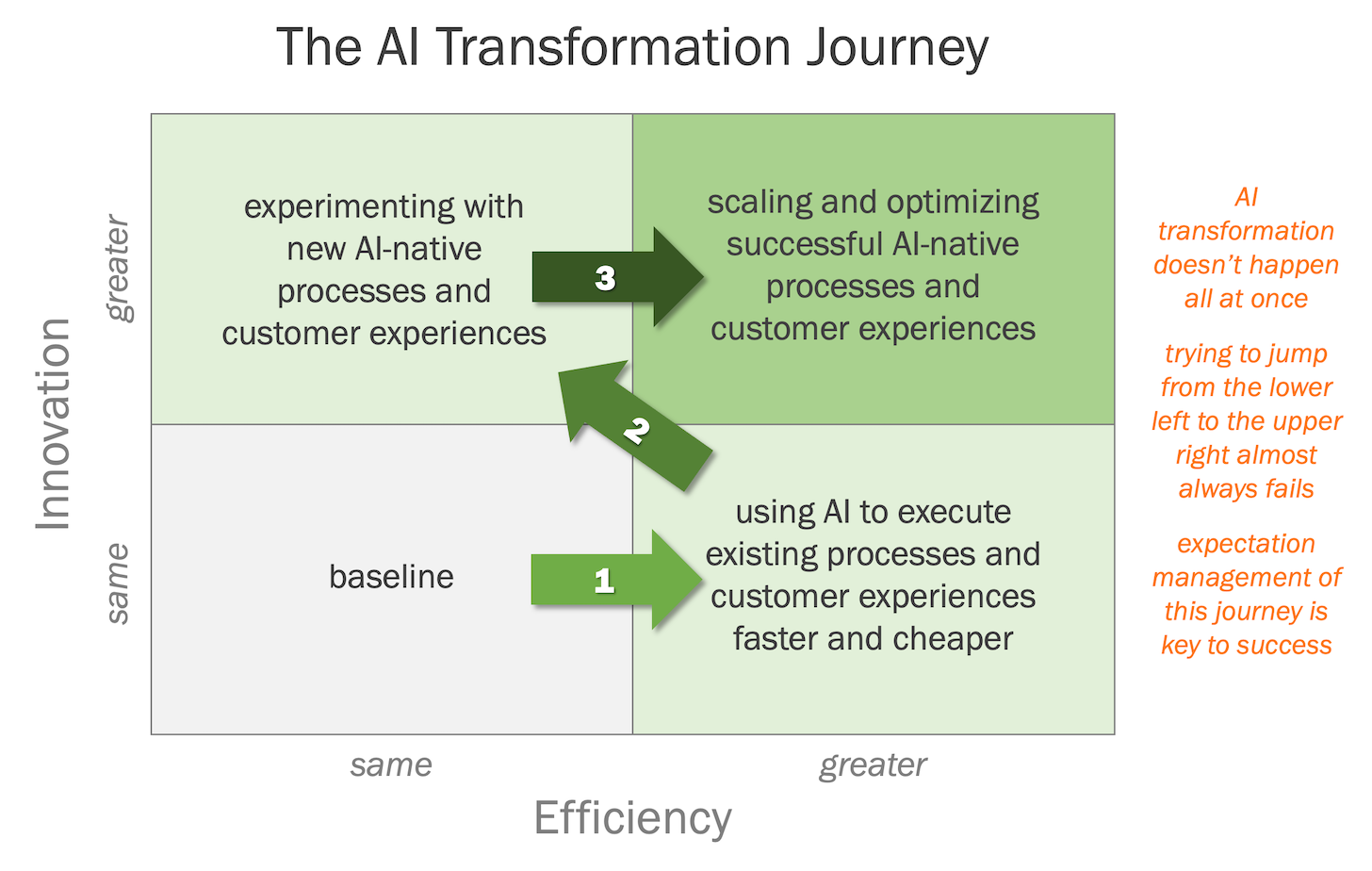
Conclusion first: pilot fast, scale slow.
The analyst has written about this category for 17 years and still leans on the same constraint, Martec’s Law: technology changes quickly, organisations change slowly. The corollary teams keep ignoring is that people-and-process work is the expensive part of absorbing a fast-moving tool.
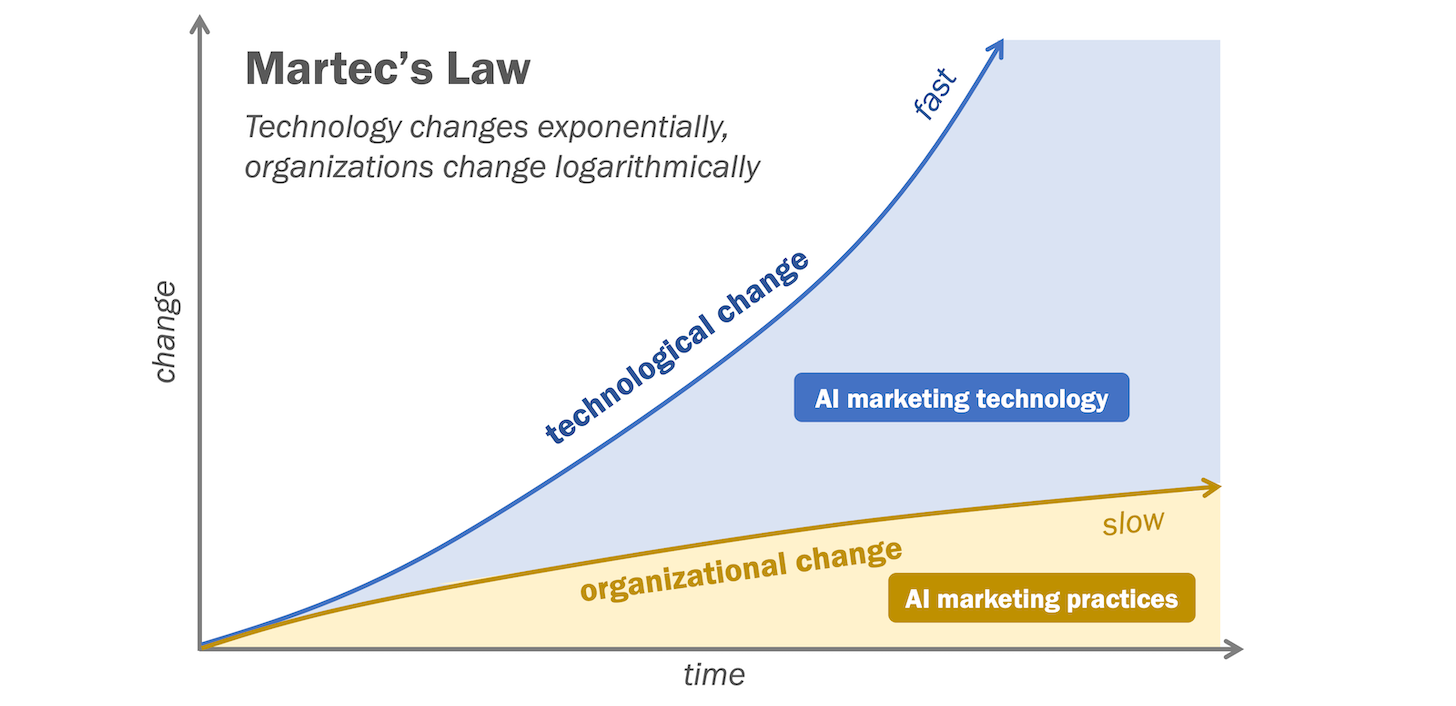
Vague but urgent top-down edicts to adopt AI push unfinished capabilities into production. The alternative is a go-slow-to-go-fast posture: high intensity for everyone, but no skipped stages — learn what the agent can and cannot do, map its dependencies and ripple effects, and decide which legacy processes need updating and which need to be retired gracefully.
Q6. Which checkpoints should be non-negotiable before scaling?
- Keep a real human reachable. Automation is never going to cover 100% of intent; edge cases are infinite, and some of them are lost revenue rather than noise.
- Run secret-shopper passes. Walk the journey as a prospect and log every touch. An outsider with fresh eyes beats an employee who knows where the bodies are buried — harder in B2B, where enrichment services pin your identity with varying accuracy.
- Inspect every live agent on a schedule. Treat it like an elevator inspection: are the rules and data definitions still valid, is the content and branding still current, what could have happened before it fired and what happens next? Timestamp and sign each review.
- Loop in the rep whose name is on the message. Let inbox rules cut the noise, then require at least a peek once the recipient answers. It is their reputation as well as yours.
- Separate the laboratory from the factory. Following Frans Riemersma's framing, a stack carries two missions: the laboratory is where you experiment with new or adapted use cases, and the production half is the steady, reliable factory.
- Treat governance as part of orchestration. Monitoring and control are the missing half of AI-era campaign orchestration; without operational discipline, keeping dozens of agents aligned is herding cats.
Q7. What does a realistic first 30 days look like?
- Days 1–5: inventory every live agent, shared inbox and cadence, and assign a named owner to each.
- Days 6–10: write intent-routing rules for billing, cancellation, complaints and security; switch on auto-acknowledgement.
- Days 11–20: run one secret-shopper pass per priority market plus one enrichment audit; log every wrong field you find.
- Days 21–30: baseline the four metrics in Q3, then set an explicit scale-up gate (for example: no nurture send while a ticket is open, no template mail after a reply).
Common mistakes APAC teams still make
- Watching AI resolution rate alone. The escalation path has its own failure rate, and it is the one customers feel.
- Reading a reply as a qualification signal. An agent that swallows a self-disqualification and then enrols the contact anyway teaches prospects your channel is one-way.
- Assuming fast personalisation equals good personalisation. Speed is the tell, not the proof.
- Pointing nurture and support at the same address with no routing test behind it.
- Scaling a pilot before dependencies are mapped — a laboratory experiment leaking into production under a customer-facing label.
FAQ: fast calls for busy growth leads
Should we turn off AI personalisation until integrations are solid?
No — turn off unattended sending. Generation can stay online; enrolment, routing and outbound cadence need a human checkpoint or a verified trigger first.
What is the fastest tell that a cadence has broken?
Any message that contradicts the last exchange. Non sequiturs are what readers screenshot and post.
Is a wrong $COMPANY-NAME token just embarrassing?
Embarrassing first, risky second. Accuracy obligations follow the data, and mixing two contacts' records inside one outbound message is precisely what regulators and enterprise procurement notice.
Do these rules change for SMEs in the region with no developer support?
They get simpler, not optional. One support address with auto-acknowledgement, plus a suppression switch that stops nurture when someone replies, is a one-week job and prevents most of the damage described above.
EDMNews will keep tracking lifecycle-automation incidents across Asia-Pacific. Corrections, tips and the working version of the checklist: info@apacedmgrowth.com.
By Elena May, APACEdmGrowth EDMNews desk.
Sources referenced
- chiefmartec (Scott Brinker) — first-hand account of the two martech automation incidents and the efficiency grid that frames them.
- Fortune China — Morning Consult survey for the 2026 Yale CEO Summit on consumer willingness to deal with AI-served companies: https://www.fortunechina.com/shangye/c/2026-10/30/content_477819.htm
- CX Dive — Parloa findings on abandonment in automated support: https://www.customerexperiencedive.com/news/3-numbers-on-the-cost-of-ai-failures/823572/
- California Management Review, Berkeley — per-interaction savings and hidden costs of chatbot service: https://cmr.berkeley.edu/2026/04/chatbot-frustration-is-real-hidden-costs-and-best-practices/
- PDPC Singapore — Advisory Guidelines on Key Concepts in the PDPA (marketing consent and notification): https://www.pdpc.gov.sg/-/media/files/pdpc/pdf-files/advisory-guidelines/ag-on-key-concepts/advisory-guidelines-on-key-concepts-in-the-pdpa-17-may-2022.pdf
- Stephenson Harwood (Virtus Law) — PDPC advisory guidance on personal data in generative AI: https://www.shlegal.com/insights/singapores-pdpc-issues-new-advisory-guidance-on-use-of-personal-data-in-generative-ai/
- LeadRiver — 2026 B2B outbound and signal-based reply-rate benchmarks: https://www.leadriver.io/blog/ai-sdr-tools-compared
- Alex Berman — B2B email unsubscribe benchmarks: https://alexberman.com/b2b-email-marketing-benchmarks